
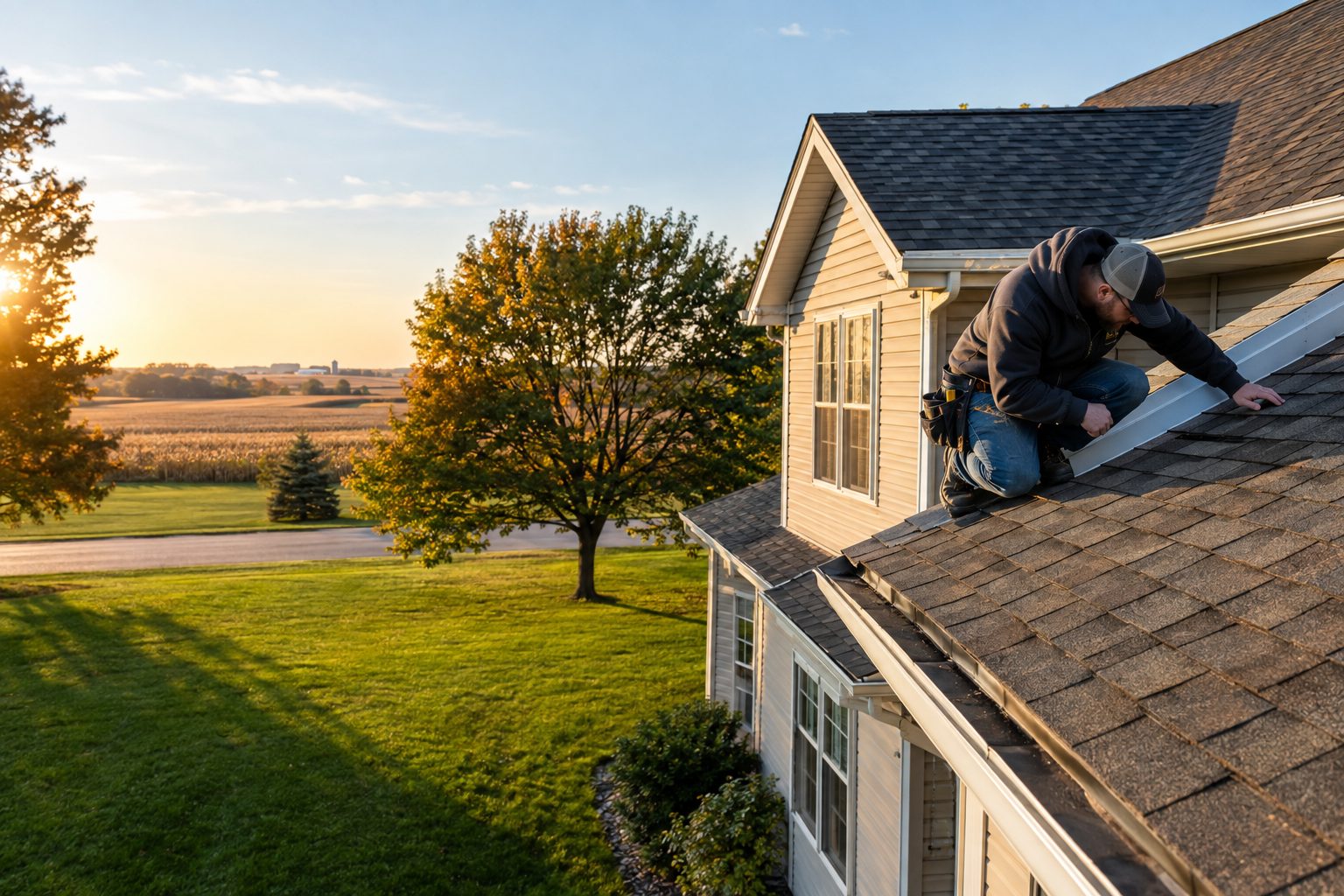
Find a roofing contractor serving Robins, Iowa, for a roof inspection, storm damage, a persistent leak, or a planned replacement, with estimates based on your home.
Call now Get a roof quoteA roof in Robins takes on more than ordinary wear. Strong winds, hail, heavy snow, and cycles of freezing and thawing can loosen shingles, damage flashing, or expose weak spots around vents and chimneys. Damage may be difficult to see from the ground, and an inspection can identify issues before moisture enters the home. Our roofing referral website connects homeowners in Robins with contractors who serve the area. Share what you have noticed, and compare the proposed work and materials before deciding how to proceed.
Storm damage is not always easy to judge from a driveway. Shingles may be creased or missing, metal edges can bend, and debris may collect in valleys or gutters. The 2020 derecho remains part of local storm history, and hail and wind continue to concern homeowners around Hiawatha and Robins. If you suspect damage, document what you can see from a safe spot and arrange for a roofing expert to assess it. Stay off a roof when it is wet, icy, or damaged. An experienced contractor can assess the roof and say whether any repairs make sense.
Some homeowners in Robins need a focused repair; others are weighing a full roof replacement. The right choice depends on the roof’s condition, its age, the extent of damage, and whether trouble spots can be repaired reliably. A useful estimate should describe the work instead of simply naming a total. Ask what will be removed, what materials are included, and how the contractor will handle any damaged decking found during the job. We can introduce you to a nearby roofer to discuss your roof and review the job details before work starts.
Robins sits near Hiawatha and the larger Cedar Rapids area, where homeowners experience the same changeable eastern Iowa weather: spring storms, summer hail, gusty winds, and winters that bring snow and freeze-thaw cycles. These shifts put stress on shingles, roof edges, flashing, and the seams around roof penetrations. Attic heat can melt snow unevenly, allowing ice to form along the eaves and push water back beneath the roofing. Clear attic ventilation and insulation can help address contributing conditions, though the roof itself should be checked for existing damage.
Robins and nearby communities have newer suburban homes alongside houses renovated over the years, so roof styles and materials differ from one property to another. A roof with several valleys, dormers, or penetrations may take more careful inspection than a simple roof plane. Trees near a home can also leave branches and leaves in gutters or against roof edges, especially after wind. Note only what you can see from a secure spot; leave hard-to-reach sections for a contractor to assess. The roof’s actual condition matters more than its appearance from the street.
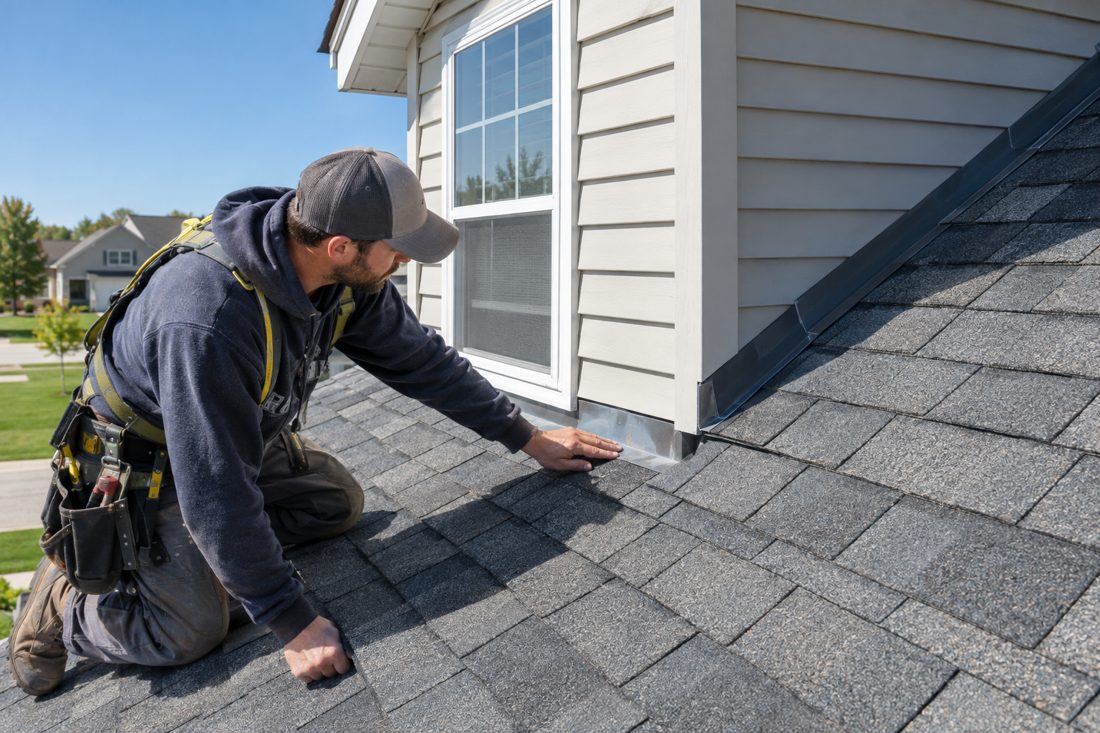
A careful inspection may reveal missing or raised shingles, deteriorated flashing, spongy areas, or other conditions needing attention. Ask the contractor to explain what they found and distinguish urgent repairs from routine maintenance. Photos and a written summary make it easier to understand the roof’s condition and compare recommendations.
After a storm, a nearby roofing crew can inspect shingles, the roof’s edges, vents, and flashing for damage. A contractor can record visible conditions and outline repair choices. If you reach out to your insurer, save the inspection information and photos with your personal storm records.
When roof repairs are no longer practical, review written replacement bids that specify tear-off, shingles, flashing, and cleanup. Talk over roof pitch, site access, and whether any roof decking may require work. A contractor can also explain whether impact-resistant shingles suit your priorities and budget.
Water stains inside do not always reveal where a roof leak begins. A contractor can trace the source, inspect nearby materials, and recommend a targeted repair. They can also check gutters, roof drainage, and attic airflow for conditions that contribute to recurring moisture or winter ice buildup.
In Hiawatha, replacing an architectural asphalt roof on an average home commonly costs $9,000 to $18,000. A Robins estimate will vary with the home and the agreed scope. Roof area and slope, removal of old layers, access, roof details, and the condition of the decking can all affect the price. Choosing Class 4 impact-resistant shingles may increase replacement expenses by about 10 to 25 percent. Ask the insurer if your policy includes a discount. A small leak repair usually costs $300 to $1,200; the cause and surrounding materials affect the final price. Have removal, materials, and any possible additional work documented in writing.
From the ground, note any visible missing shingles, damaged gutters, or debris, and take photos if it is safe. Do not climb onto the roof. Arrange an inspection with a contractor serving Robins, then keep the written findings and photos if you decide to discuss a claim with your insurer.
Yes. When snow melts unevenly and refreezes near the eaves, backed-up water can get beneath roofing materials. Insulation and attic airflow can contribute to the conditions that create ice dams, so ask the contractor to look beyond the visible leak and explain any related concerns.
Coverage depends on your policy, the documented damage, and your insurer’s review. For covered storm damage, homeowners typically pay the deductible, and the insurer pays the remainder of the approved work. Request an itemized estimate, review it against the adjuster’s records, and ask your insurer about anything unclear regarding coverage.
Share the roof problem, any visible damage, and the help you need, and we can refer you to a contractor serving Robins.