
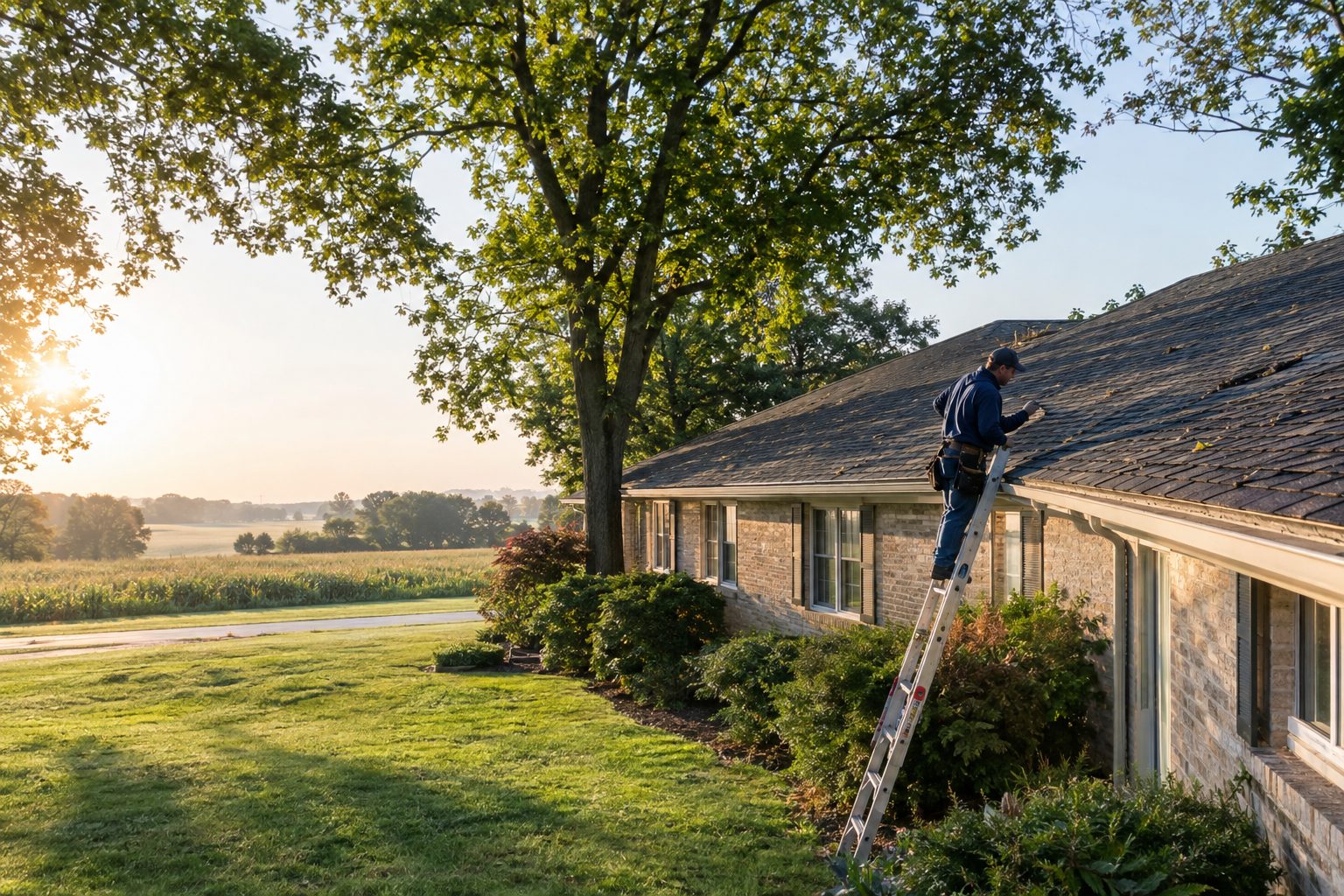
Locate a roofing contractor for a thorough assessment, storm damage repairs, leak diagnosis or planned replacement at your Hiawatha home.
Call now Request a quoteHiawatha roofs face a mix of weather, from summer hail and strong winds to winter snow, ice and freeze-thaw cycles. People here still recall the 2020 derecho, and roof damage may not be visible from the ground. Missing shingles are easy to spot, but lifted edges, loosened flashing or bruised shingle surfaces may need a closer look. Water entering through a small gap may reach the roof deck or attic before a ceiling stain develops. A roof assessment can identify urgent concerns as well as issues that can wait.
This website gives homeowners in Hiawatha, Iowa, a way to find roofing contractors serving the community. You can request help with a leak, ask about damage after hail or wind, or discuss replacing an aging roof. The contractor can assess the roof’s condition and explain possible next steps for your home. Each property is different, so an estimate should reflect the actual roof, materials and work involved, not just a broad online average. Fill in the quote form with what you have observed and the assistance you need.
If a storm has passed through, note visible damage from a safe place and take photos when conditions allow. Stay off the roof when it is wet, icy or damaged. A roofing professional can examine shingles, flashing, roof perimeters, and components difficult to inspect while standing at ground level. For a leak, share when it began and where water shows inside, while keeping in mind that the source may be some distance from the stain. A clear description gives the contractor a useful starting point for evaluating your Hiawatha roof.
Hiawatha has a mix of one-story ranch homes, split-level houses and two-story homes, with roof shapes and ages that vary from block to block. On a simpler roof, shingle wear may be easier to see, while multiple slopes, valleys and roof penetrations add places where flashing and sealants need attention. Mature trees around some homes can drop branches or keep roof sections shaded, which may leave debris in valleys and gutters. A contractor should look at the whole roof system, including the edges and drainage paths, rather than focusing only on the most visible patch.
Wind and hail remain practical concerns in this part of Iowa, while winter brings snow and ice that can collect along roof edges. Ice dams can trap water along the roof, allowing it beneath shingles, particularly when attic ventilation and insulation are not working well together. After the derecho in 2020, homeowners know that strong winds can leave damage that develops into a leak later. In Hiawatha, a prompt inspection after a storm can help document the roof’s condition. It is also useful to ask whether gutters, flashing and attic ventilation should be checked as part of the evaluation.
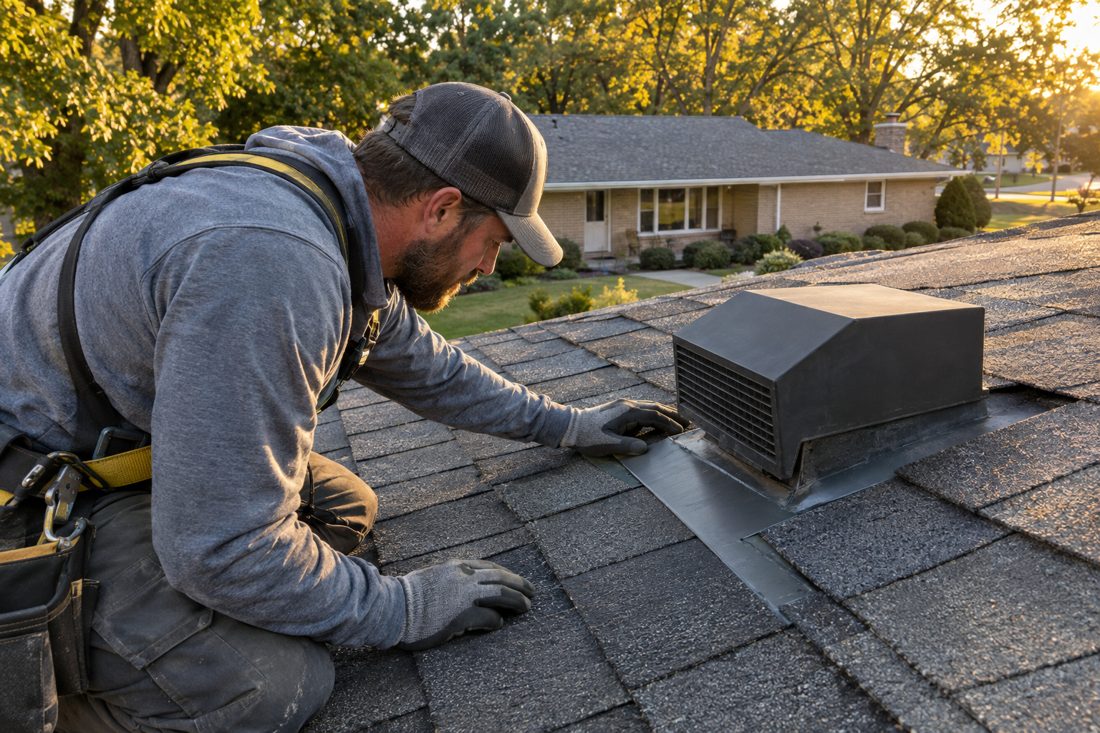
Have a roofer check the shingles, flashing, valleys, perimeter and other roof features for aging or storm damage. The inspection can help distinguish an isolated repair from broader deterioration. Ask for photos or a written report so you can review the findings and decide which work is appropriate.
Hail can bruise shingles, while strong wind may lift or remove them and loosen flashing. A nearby roofer can assess the affected areas and recommend repairs based on what is actually damaged. If you are weighing an insurance claim, save the photos and assessment records for your files.
If the roof’s condition makes repairs unsuitable, a contractor can review replacement choices, tear-off requirements, and project specifics. Discuss shingle options, roof details and any concerns about the decking before work begins. A written quote clarifies the work covered and the factors that might change the scope or price.
Water stains can come from a damaged shingle, flashing, roof penetration or another point along the roof. A local roofing team can track down the likely entry point and inspect the surrounding materials. Gutters and attic airflow may also be worth reviewing when runoff or winter ice is part of the problem.
For an average home in Hiawatha, installing a new architectural asphalt roof usually costs $9,000 to $18,000. Pricing may depend on the roof’s dimensions and slope, how many old layers need removal, access, roof features, and any repairs to the decking. Ask the contractor to document tear-off, supplies and potential extra tasks. Class 4 impact-resistant shingles may add about 10 to 25 percent to a replacement budget; ask your insurer whether your policy offers a discount. Small leak repairs often cost $300 to $1,200, depending on where the leak is and how much effort it takes to locate its cause. For storm claims, the insurer decides what is covered and which work it approves; homeowners generally pay the deductible.
Once it is safe, arrange an inspection, especially if shingles are missing, debris has hit the roof, or you see signs of water intrusion. Wind and hail damage may not be clear from the ground. Take pictures from a secure spot and stay off the roof, especially after rain or when it is icy.
Yes. Ice can build along roof edges and hold water there, and that water may find a path beneath shingles. Attic insulation and ventilation can affect how much heat reaches the roof, but the roof condition matters too. An experienced roofer can assess the damage and explain whether roof work or attic upgrades make sense.
Read your policy and ask your insurer about the claim steps before approving work that may be covered. A roofing contractor can document visible damage and provide an estimate, but the insurer decides coverage and approved work. Put the written quote alongside the adjuster’s records, then ask how to address any differences.
Explain your roof concern, recent storm damage, and where you noticed a leak so the contractor can determine what help you need.