
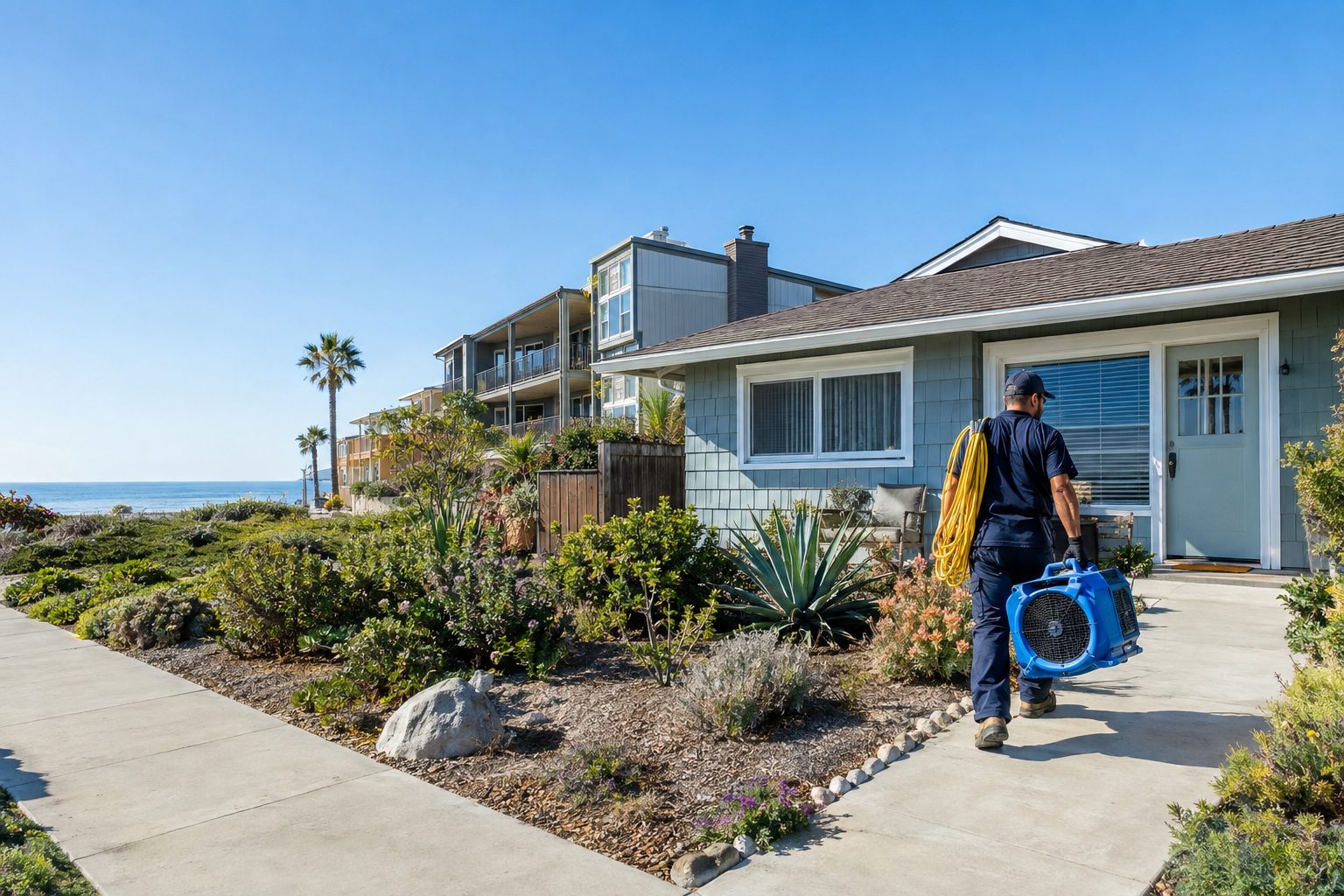
Water from a leak in a coastal residence may reach areas well beyond its point of origin. Find help with water removal, drying, and restoration planning in the Sand Section.
Call now Request an EstimateWater damage can move quickly through a home, even when the original leak seems small. Water from a loose plumbing joint, an appliance line, or a roof gap can seep beneath floors or into walls before obvious surface signs appear. In the Sand Section, Hermosa Beach, CA, homes are often close together, and older multi-unit buildings may share walls, ceilings, or building systems. That makes it important to identify the affected areas, stop the source if possible, and begin drying before moisture reaches more materials.
Homeowners can use this site to find nearby restoration providers for water extraction, drying, and related cleanup. Local drying specialists can evaluate the visible damage, look for moisture outside the damp area, and identify materials that might require removal. The next steps depend on the water’s origin, how long it has remained, and which spaces or materials it reached. Keep away from standing water near electrical equipment, and ask the right plumber, property manager, or utility specialist to fix the source.
Restoration is more than taking up water from the floor. Wet drywall, insulation, cabinets, and flooring may need careful assessment, while equipment helps lower moisture in building materials. In a Sand Section home, coastal air can already feel damp, so drying should be guided by moisture readings rather than appearances alone. Request details about the rooms involved, the proposed tasks, and the way the work’s progress will be recorded. The aim is to manage the damage methodically and provide a useful record for repair decisions.
The Sand Section has a close-knit mix of beach cottages, condos, and older multi-unit buildings, with homes often near neighboring structures. That layout can complicate a leak: water from an upper-floor bathroom may stain a ceiling below, or moisture behind a shared wall may affect another unit. Coastal humidity and marine air may make a wet room take longer to dry. A restoration inspection should look beyond the first visible stain and consider adjoining rooms, wall cavities, flooring edges, and ceilings where water may have traveled.
Daily routines in a compact coastal neighborhood can add practical challenges during cleanup. Residents may need to coordinate access through a shared entrance, protect belongings in a small living space, or arrange work around neighbors and building management. If the source is a shared pipe, roof area, or another unit, tell the property manager promptly and ask who should coordinate access and insurance communication. For a leak inside a single home, document what you see and keep damaged materials undisturbed until the restoration crew can assess them, unless immediate safety requires otherwise.
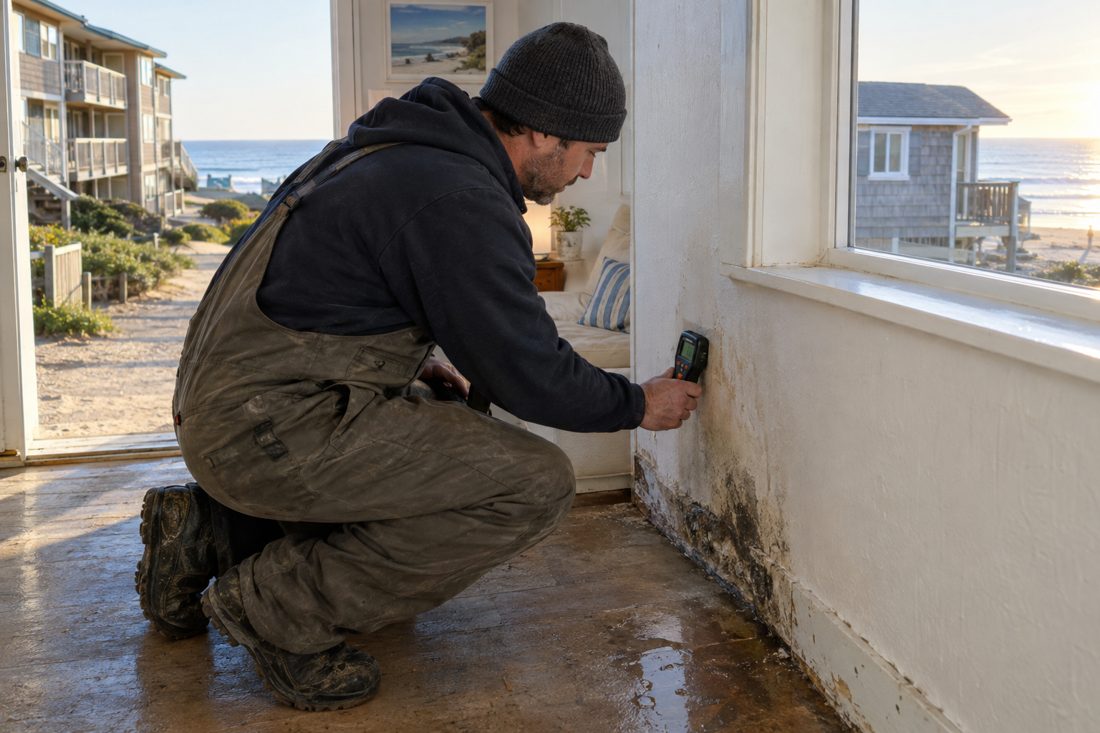
Water extraction removes pooled water from floors and other accessible surfaces, allowing drying to start. Workers can review the affected rooms and explain whether moisture might have spread below floors or into nearby materials. Let the crew know when you first noticed the water and whether it continues to flow.
Once standing water is removed, drying machines and moisture monitoring can help deal with water retained in walls, floors, and other parts of the structure. The affected area may extend past the visible stain, particularly where water has traveled along a ceiling or wall. Ask for updates that explain what is being measured and which areas remain damp.
Restoration providers can address water damage from a broken supply pipe, a leaking appliance, or water coming through the ceiling or roof. The restoration work addresses the resulting moisture, but the plumbing or roof problem may need a separate repair professional. Confirm that the source has been stopped before closing up wet areas.
Fast moisture control may make conditions less suitable for mold, but cleanup companies should not promise mold will never develop. Crews may document moisture readings, affected locations, and work completed. Keep copies of photos and reports, and ask the company to explain any recommended removal, cleaning, or separate reconstruction.
Removing water and drying a leak limited to one room generally costs $1,200 to $4,500. The final price varies with the water volume, the materials affected, and the time needed to dry them. Water limited to a small area is not the same as moisture trapped inside a wall or under a floor. Costs can reach $5,000 to $15,000 or more if several rooms are affected, flooring needs removal, or the water is category 2 or 3. Reconstruction is excluded. Ask for a documented estimate that lists affected locations, tasks, equipment, and possible added work. These figures do not necessarily include new finishes or repairs to the plumbing or roof. Coverage is determined by your policy terms and the cause of the damage.
Yes. In older multi-unit buildings or houses with shared walls, water may pass through ceilings, inside walls, or below floors and show up in a different unit. Let the property manager know if the source may involve a shared system or neighboring space. A restoration inspection can help identify which areas need moisture checks.
When conditions allow, move belongings away from damp areas and photograph the damage before cleanup begins. Do not use electrical equipment where standing water may create a hazard, and avoid opening walls or removing flooring without guidance. In the Sand Section, damp marine air can affect how a space feels, so moisture readings are more useful than judging dryness by touch.
Coverage depends on your policy and how the water entered the home. Insurers may handle a sudden break in a supply line differently from persistent seepage or exterior flooding, causes that policies often exclude. Keep photos, estimates, and moisture records, then check with your insurer about handling your particular claim.
Tell them where you found water, its likely source, and any rooms or adjoining units that appear impacted.