
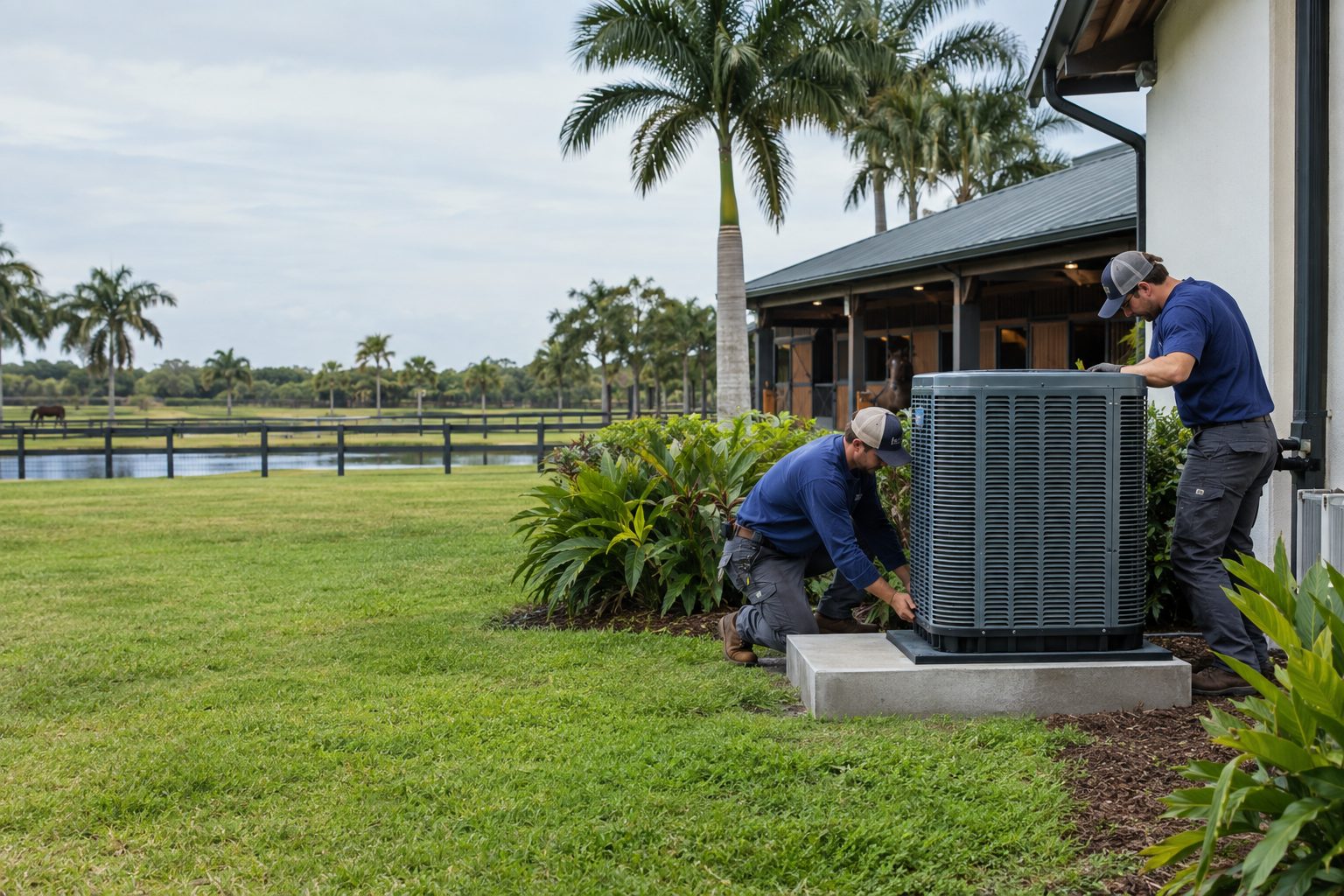
Large homes in Palm Beach Point need cooling systems designed for South Florida's hot, humid weather. Fill out the estimate request form to find an HVAC provider in Wellington.
Get HVAC QuotesResidents of Palm Beach Point depend on air conditioning for everyday comfort through much of the year. Long, humid stretches can leave a system running hard, while a warm afternoon may reveal a problem that was easy to miss during milder weather. Uneven room temperatures, frequent system cycling, or damp indoor air may warrant an AC technician's inspection and guidance on needed work. Our referral website helps homeowners share their project details through a quote form and connect with nearby HVAC companies serving Wellington, Florida.
The right fix depends on the home, the equipment and how the system is used. A repair may be enough for a unit with a failed component, while an aging system with recurring trouble could be a candidate for replacement. Larger homes often benefit from zoning, which can direct cooling to different areas instead of treating the entire house as one space. A local pro can look at existing equipment, ductwork and thermostat settings before recommending a solution, rather than assuming one system design works for every Palm Beach Point property.
Humidity, heavy rain and summer storms all shape HVAC upkeep in Wellington. Outdoor equipment needs a clear area around it, and storm debris should be kept away from the unit. Palm Beach Point is inland compared with coastal communities, so direct salt-air exposure is generally less of a concern, but outdoor components still face moisture and weather. Regular service can uncover drainage issues, dirty coils or worn electrical parts before they interrupt cooling. In your estimate request, describe the issue and say whether you're seeking a fix, scheduled maintenance, or a replacement price.
Palm Beach Point is part of Wellington, where larger homes can have long cooling runs, multiple living areas and rooms with different comfort needs. A single thermostat may not reflect conditions throughout the house, especially if some spaces are used more often than others. Zoned systems and high-efficiency equipment can be worth discussing for a home with uneven temperatures or a high cooling demand. An HVAC pro can assess the layout and existing ductwork to determine whether zoning, airflow adjustments or a different system approach makes sense for the property.
South Florida’s humid climate puts steady demands on cooling equipment. Air conditioners remove humidity while cooling. If your indoor air feels damp and clammy, a thermostat adjustment may not be enough. Wellington’s storm season also brings wind-driven rain and debris that can affect outdoor units or drainage. Keep the space around the outdoor condenser open, and watch for odd sounds, water by indoor equipment, or an abrupt airflow change. Palm Beach Point’s inland location means less direct salt air than beachfront neighborhoods, but routine checks still help protect equipment from moisture and exposure.
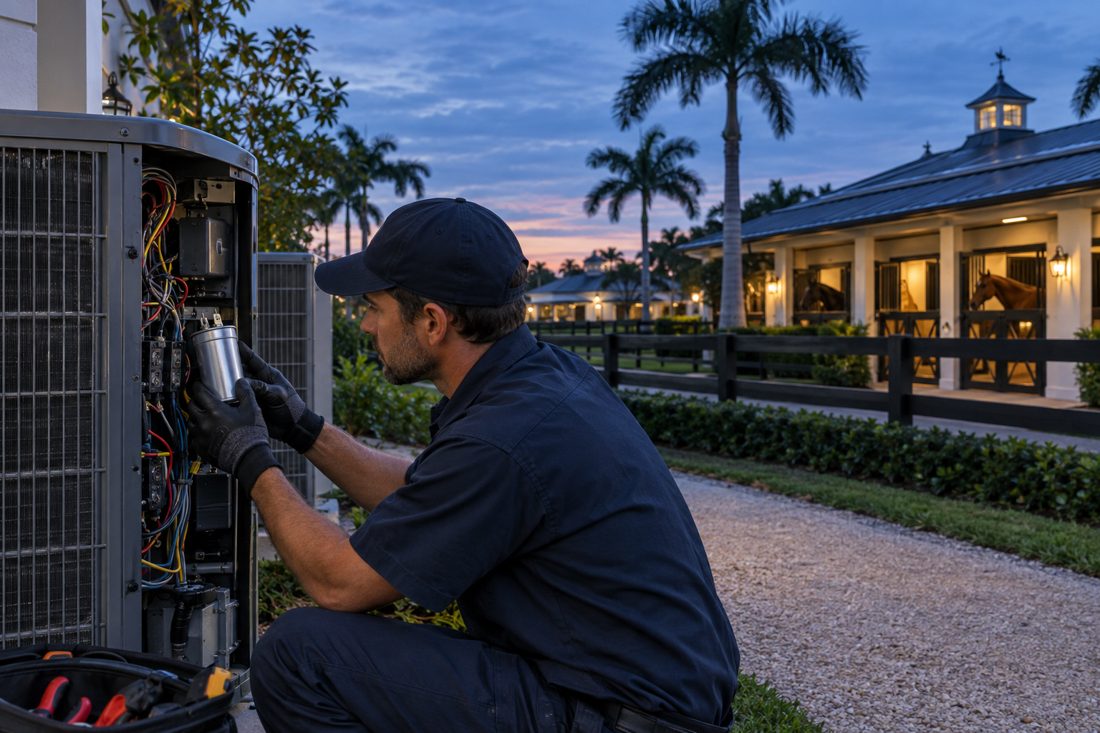
When cooling stops, airflow drops, or strange noises begin, an AC technician can examine the equipment and identify a likely cause. Tell us which rooms have the problem and when it first started. That detail helps a nearby HVAC company prepare for a focused diagnostic visit.
Replacing equipment is a chance to match capacity and efficiency to the home, not simply swap in a similar unit. For larger Palm Beach Point properties, ask about zoning, duct condition and thermostat placement. A pro can explain installation options and what changes the estimate.
A maintenance appointment may involve testing operation, inspecting drainage, and checking parts that gather dirt or wear over time. If indoor air feels damp or stale, discuss filtration and humidity control as well. Maintenance plans are available from local companies, with service tailored to the installed system.
A duct leak or poor air distribution may keep some rooms uncomfortable even while the unit is operating. A contractor can inspect accessible ductwork, discuss cleaning or repairs, and check thermostat settings. Smart controls may also help manage cooling schedules across a larger household.
An AC repair in the area typically runs about $150 to $650. A major repair, such as replacing a compressor or coil, may cost $1,500 to $3,500. Installing central air conditioning or a heat pump in a home usually costs $7,000 to $14,000. The price depends on system capacity, efficiency, and the state of the ductwork. A yearly maintenance plan generally costs $150 to $300. The inspection results, selected equipment, and job scope at your home help determine the final estimate. Rebates and federal tax credits may bring down the price of energy-efficient equipment. Ask an HVAC professional which incentives might apply to your project.
This approach can help when areas of a home need different temperatures or are occupied at different times. Zoning uses controls to direct conditioned air to selected areas. A contractor should first evaluate the equipment, duct layout and home design to confirm whether zoning is practical and what changes would be involved.
An air conditioner needs to remove moisture from indoor air as it cools. If a home still feels damp, the cause could involve equipment operation, airflow, drainage or system sizing. Describe the conditions to an HVAC pro so they can check the system rather than relying on temperature alone.
Keep plants and loose items clear of the equipment, and check the area for leaves or storm debris after severe weather. Avoid covering a unit while it is operating. If the system is damaged, flooded or behaving differently after a storm, stop using it and request an inspection from an HVAC company.
Share what your system is doing and a nearby HVAC company can follow up with options.