
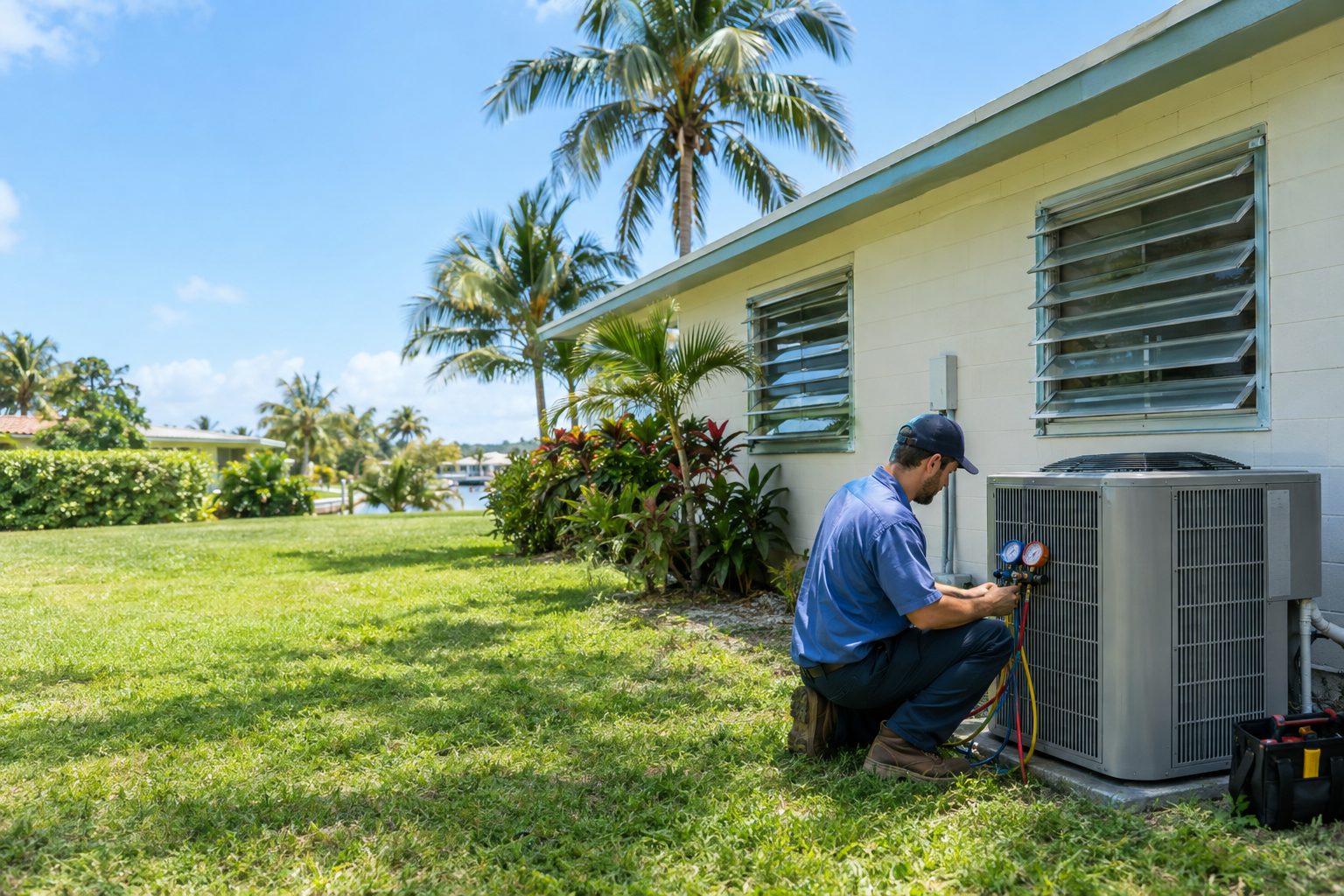
Riviera Beach homes deal with extended heat, humid conditions, coastal salt, and summer storms. Get in touch with an HVAC professional about maintenance, repairs, or a replacement estimate.
Request a QuoteAir conditioning helps Riviera Beach households remain comfortable through much of the year. Humid, warm weather can make a house feel damp well into the evening. When the AC cannot keep up, it may run for hours without making the rooms comfortable. A local HVAC provider can examine the equipment, evaluate airflow, and help determine whether a repair is enough or the entire system needs further assessment.
Riviera Beach properties include detached homes, condos, and other multifamily housing, each with potentially different air conditioning needs. A system serving a compact apartment may have different equipment and access needs than one cooling a larger house with several rooms and ducts. Point out hot spots, odd noises, water near the indoor unit, or a thermostat reading that seems inconsistent with how the rooms feel.
Coastal conditions also deserve attention. Coastal salt may wear down exposed outdoor components, and humidity makes the AC work harder to cool and remove moisture. Storm season brings its own concerns, including power interruptions and debris around outdoor units. If the AC stops working or begins acting differently, share what happened and when you first noticed the change. Use the quote form to locate an HVAC contractor serving Riviera Beach, Florida.
The mix of houses, condos, and waterfront properties around Riviera Beach means an AC visit may involve different layouts, equipment locations, and building arrangements. In a condo, access to the unit or shared building rules may shape the work. At a house, duct condition, insulation, and airflow between rooms can all affect comfort. Let the technician know which rooms stay warm, whether doors need to remain open for airflow, and if the system has had recurring trouble.
Near the coast, outdoor equipment can be exposed to salt carried in the air, so it is worth asking about its condition during routine service. Humidity is another everyday challenge: a system may cool the thermostat area but still leave the home feeling clammy if airflow, drainage, or equipment operation needs attention. Clear leaves and debris from the outdoor unit before and after summer storms. Have a professional check for damage or ongoing changes in performance.
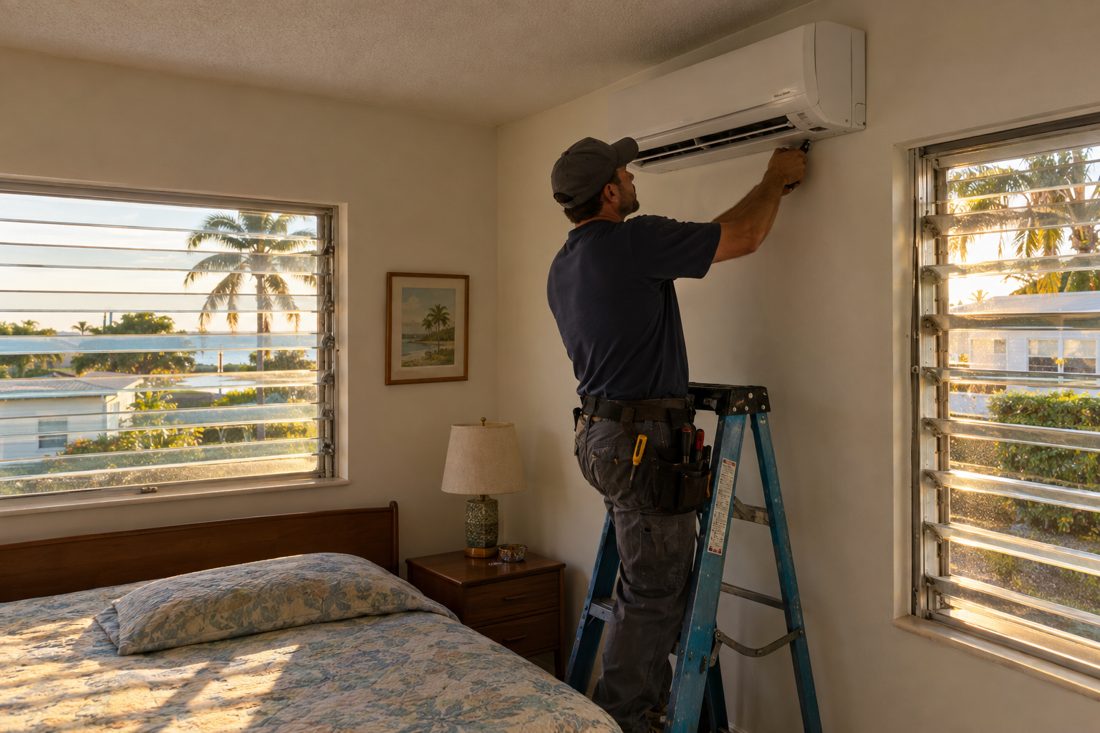
If your unit blows warm air, keeps turning on and off, leaks, or starts making strange sounds, have an area air-conditioning technician examine it. Letting the professional know when the problem started and which rooms are affected may help guide the inspection. The technician can explain the repair options and provide a quote before work begins.
For an older unit with recurring issues or uneven cooling, discuss replacement choices with a professional. Proper sizing matters for comfort and humidity control, especially in South Florida. A professional can review the home, existing ducts, and efficiency preferences, then outline equipment and installation choices for your quote.
During routine maintenance, a technician can review how the system runs, check drainage and airflow, and inspect accessible parts to catch concerns early. In Riviera Beach, salt air and long cooling seasons make ongoing attention useful. Ask what a plan includes and how often visits are scheduled before choosing one.
Blocked or leaking ducts may cause uneven cooling and energy waste. High humidity can also leave the air feeling unpleasant indoors. A nearby HVAC company can assess duct concerns and discuss suitable filtration or other indoor-air options. The best next step varies with your home, the equipment, and the problem at hand.
In Riviera Beach, AC repairs often cost around $150 to $650. Replacing a compressor or coil, for example, may cost about $1,500 to $3,500. Installing central air conditioning or a heat pump in a home generally runs from $7,000 to $14,000. The total depends on system size, energy efficiency, and any ductwork needed. Yearly maintenance plans generally run between $150 and $300. Since costs depend on the equipment and required work, request a detailed estimate before authorizing the job. Certain high-efficiency units could qualify for rebates or federal tax credits, though eligibility rules and availability differ.
Many homeowners arrange a maintenance visit before the heaviest cooling season, then follow the schedule recommended for their system. Long periods of heat, humidity, and coastal exposure make it useful to keep up with filter changes and have drainage and system operation checked. Ask the technician what schedule fits your equipment and use.
Over time, salt in coastal air can contribute to deterioration of equipment exposed to the elements. The amount of exposure varies by home and unit location, so have a technician inspect the outdoor components and explain any signs of deterioration. Keeping the area clear and following the equipment maker’s care guidance can also help.
First, check whether the home has power and whether the thermostat settings appear normal. Avoid opening electrical components or repeatedly resetting a system that trips. If the equipment stays off, or you notice water, storm debris damage, or unusual sounds, describe these issues on the quote form for an HVAC professional to review.
Share what your system is doing and a nearby HVAC company can follow up with options.