

From a slow drain to a leak that may be hidden beneath a slab, connect with a licensed plumber serving Olivenhain and get help assessing the next step.
Request a Plumbing QuotePlumbing problems can disrupt a quiet day at home quickly. A dripping faucet, a backed-up drain, or a water heater beginning to malfunction may call for investigation rather than a quick guess. Our referral website helps homeowners in Olivenhain connect with local licensed plumbers who can look into the issue, explain possible repairs, and provide a job-specific estimate. In the quote form, describe what you noticed, its location, and when it began. Those details can help a plumbing technician familiar with the area decide what to check.
Olivenhain has a more spacious, rural feel than the busier parts of Encinitas, with homes on larger lots and a mix of house styles. A home’s layout may shape the work: fixtures or equipment might be well away from living spaces, and pipe access differs among properties. The age and construction of the home matter, too. A plumber may need to check shutoff valves, pipe materials, drainage, and the route of a line before recommending a repair. A clear diagnosis helps avoid treating a symptom while missing its source.
Coastal North County’s mild weather does not eliminate plumbing wear. Daily use, mineral deposits, aging connections, and shifting conditions around a home can all contribute to trouble over time. Slab foundations in Encinitas homes can be associated with slab leaks, and some older coastal properties may have galvanized pipes. If water use changes unexpectedly, floors feel damp, or drains repeatedly slow down, describe those signs instead of assuming the cause. Submit the form to request a connection with a licensed plumber serving Olivenhain and ask which inspection or repair approaches could fit.
Olivenhain properties often have more room around the house than compact coastal lots, but that does not make every plumbing line easy to reach. Larger homes and spread-out layouts can mean longer runs between a water heater, bathrooms, kitchen, and laundry area. A plumber can check the system if hot water arrives slowly or pressure varies, and determine whether the cause is one fixture or a larger part of the home. Bring up any recent changes, such as new appliances or remodeling, when describing the concern.
With slab foundations found on some Encinitas properties, an under-floor leak can be hard to detect initially. Mention warm areas, moisture with no clear explanation, or a water bill higher than expected, while noting that other causes are possible for each. In older coastal properties, galvanized piping may also be a concern; a plumber can assess the material and its condition rather than assume replacement is needed. Olivenhain’s landscaped lots can make sewer-line access and root intrusion questions relevant as well. The inspection should establish the actual location and scope before work is priced.
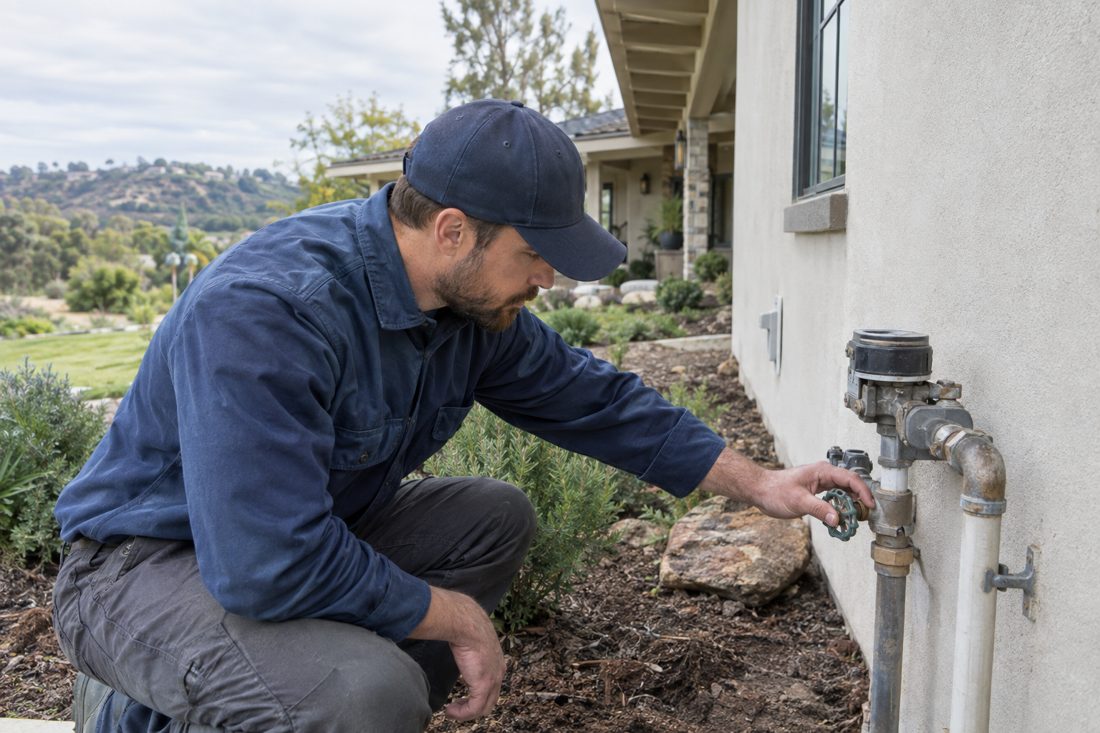
A plumber can follow visible leaks, damp spots, or other clues to a hidden leak, then suggest a fix based on its source. For a possible slab leak, share changes in water use and any warm or wet floor areas. Proper diagnosis helps distinguish a pipe issue from another source of moisture.
Slow-moving sinks, tubs, or toilets may need clearing; repeated backups can signal a wider drain or sewer problem. A plumber can inspect the pipe and discuss whether a camera inspection might uncover roots, damage, or a blockage before recommending repairs.
A plumber can assess the unit and outline repair or replacement options if the water turns cold, the tank leaks, or unusual sounds occur. Service may include tank-style or tankless equipment, with recommendations based on household needs, existing connections, and installation conditions.
A plumbing professional can assist with fixture replacements during a kitchen or bathroom renovation and check the condition of aging pipes. If a property has galvanized pipe, ask about its condition and the scope of any proposed update. Estimates should distinguish the requested work from related repairs that may be needed.
The final price varies with the issue, access conditions, and amount of troubleshooting required. For comparison, a basic service visit for a minor repair commonly costs $150 to $450. Main drain clearing typically runs $200 to $600, with a camera inspection costing an additional $150 to $350. Installing a conventional 40- to 50-gallon water heater generally costs $1,500 to $3,500, labor included; tankless models usually range from $3,000 to $6,500. Work on just a short section of sewer line may run about $1,500, whereas a complete replacement can reach $10,000 or more. Before authorizing the job, request a diagnosis and an itemized written estimate that explains what the price includes.
Signs may include moisture with no clear source, a warm spot on the floor, or an unexplained increase in water use. These signs are not proof of a slab leak, since other plumbing or household issues can cause similar symptoms. Explain the symptoms and ask a licensed plumber to look into them before choosing a repair.
Not automatically. The right choice depends on the pipe’s condition, how much of the system uses that material, and any symptoms such as reduced flow or leaks. A plumber can inspect accessible sections and explain whether a repair, partial update, or broader repiping is appropriate for your home.
A camera inspection can help when drains repeatedly clog, several fixtures back up, or a plumber needs to locate a problem inside a sewer line. It may clarify whether there is a blockage, root intrusion, or pipe damage. The plumber can advise whether inspection is warranted after learning about the symptoms.
Tell a licensed plumber where the problem is and what has changed so they can evaluate your needs.