
Water can move past the spot where it first appears, especially in a finished basement or inside a wall. Find restoration help for homes in Platte Woods, Missouri.
Call now Get a QuoteA basement leak can turn into a larger cleanup before the floor looks especially wet. Water may travel under carpet, soak baseboards, or move into wall cavities, while stored belongings make access difficult. In Platte Woods, finished basements are common enough that homeowners often need more than a quick mop-up after a sump pump failure, pipe leak, or heavy rain. Crews may remove pooled water, check building materials with moisture meters, and set up drying equipment when needed. The first step is describing what happened and which rooms or items appear affected.
This site helps Platte Woods homeowners find businesses that provide water extraction, structural drying, and restoration services. The work needed varies with the water source, volume, and length of exposure. A small appliance leak may call for a focused cleanup, while water that has spread beneath flooring or into several rooms can require material removal and more extensive drying. If you are unsure where the water traveled, explain what you can see and when you noticed it. A nearby restoration company can inspect and outline the work it recommends.
Water damage can come from inside or outside the home. A supply line or appliance connection may fail suddenly, while a roof or ceiling leak can show up after a storm. Frozen pipes pose a risk during cold spells, while recurring spring rains can strain basement drains and sump systems. Stay away from electrical hazards, and turn off the water supply only if it is safe. Photograph damaged belongings before moving them. Then describe the problem on the quote form to be matched with a local drying crew.
Platte Woods sits in the Northland, where many homes have lower-level living space that owners use for family rooms, offices, or storage. A sump pump failure can affect carpet, finished walls, and furniture all at once, and moisture may remain in materials even after visible water is gone. Homes also have different layouts and finishes, so the drying plan should reflect what is actually wet rather than relying on a one-size-fits-all approach. Tell the inspector whether the basement is finished, where water appeared, and whether you noticed dampness or odor in nearby rooms.
Weather shifts can create several kinds of water trouble around Platte Woods. Heavy spring rain can expose drainage problems or overwhelm a sump system, while freezing conditions can put vulnerable plumbing at risk. Roof and ceiling leaks may also leave water trapped above drywall or insulation, even when the stain looks small. Local soil and grading can influence how water moves around a foundation, but the source should be checked instead of assumed. Share any recent rain, freeze, plumbing work, or pump issue with the restoration company so it can investigate likely pathways and document moisture.
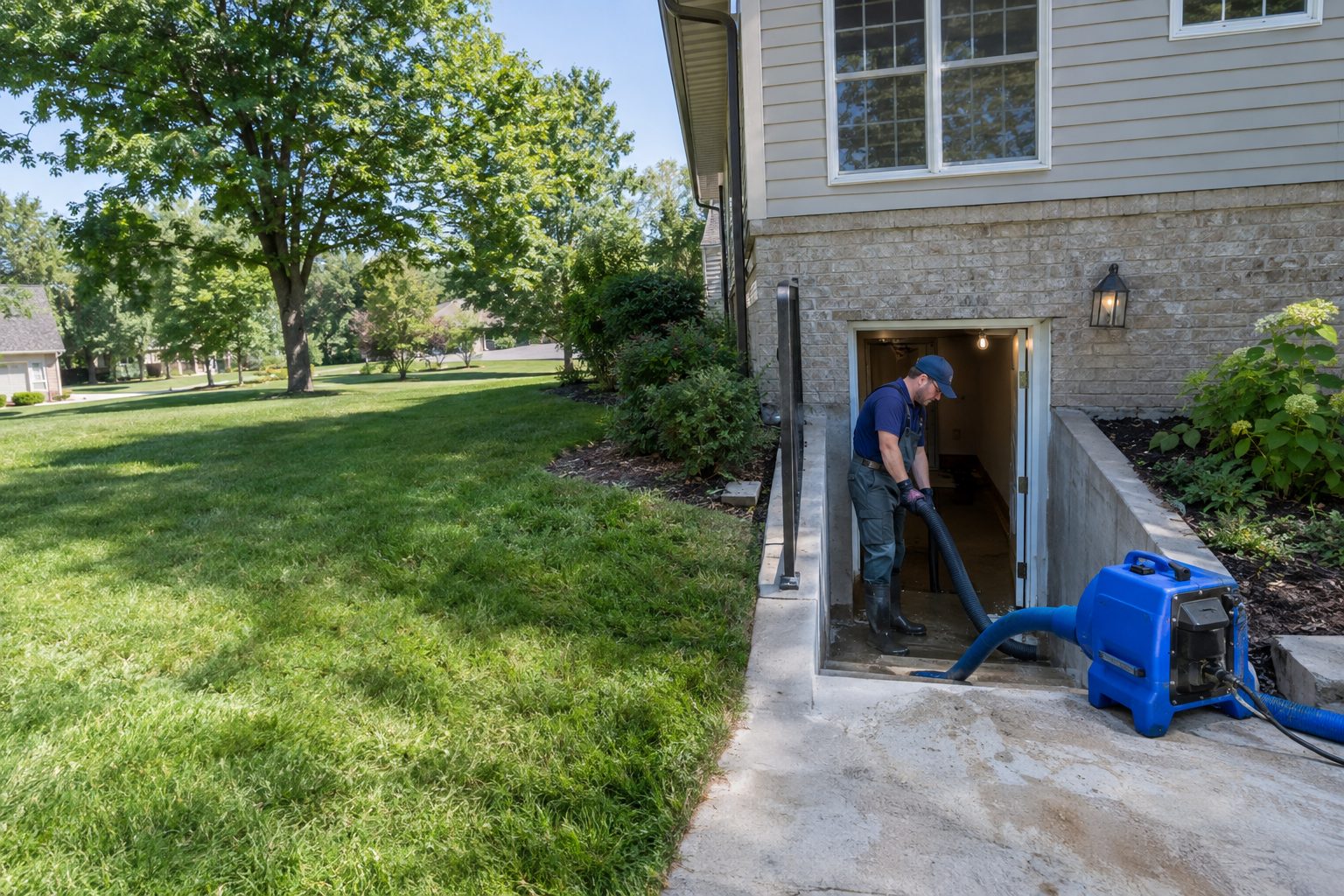
Extraction equipment removes accumulated water from basement floors, utility rooms, and other affected locations. As work proceeds, the crew can inspect the wet area and adjacent materials, including carpet or flooring that may trap water underneath. Prompt removal helps prepare the space for drying.
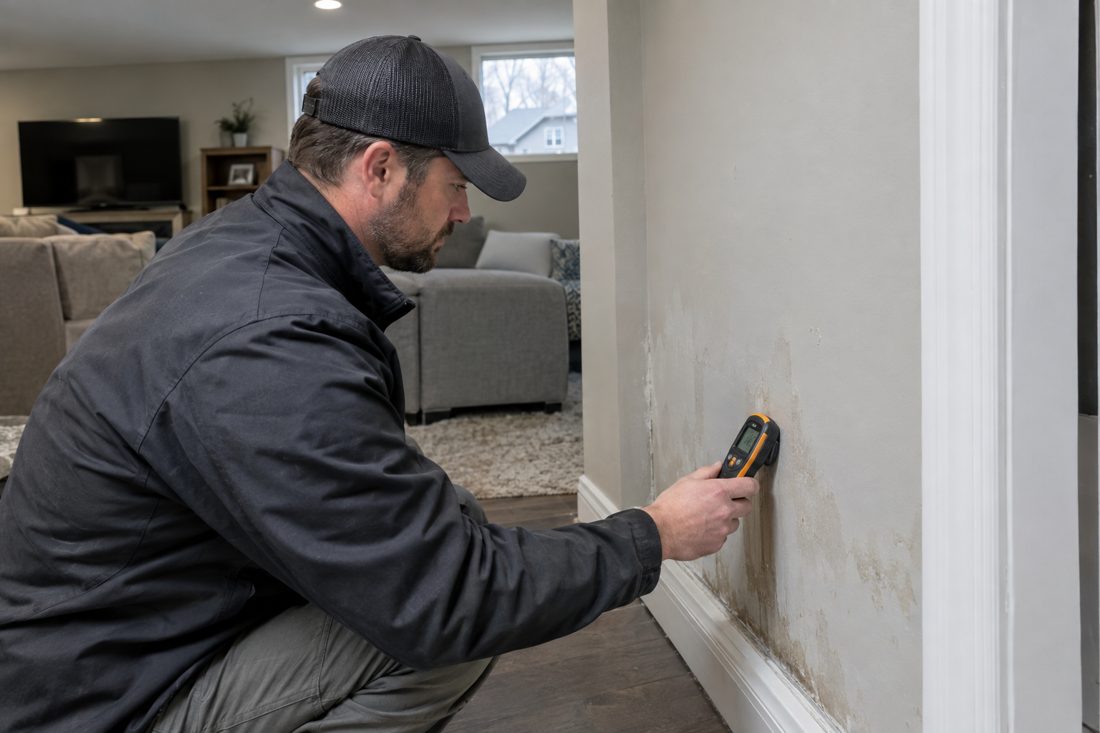
Air movers and dehumidification equipment help dry building materials after water is extracted. Technicians can check affected surfaces and record moisture readings during the process. In a finished Platte Woods basement, this may include checking wall edges, flooring, and other places water can collect out of sight.
Restoration companies can address water intrusion tied to plumbing, household appliances, roofing, or ceiling leaks, while another trade may need to correct the underlying source. Describe where the water started and whether it is still active. Clear information helps the crew plan cleanup and identify what needs further inspection.
After a leak or flood, drying wet materials and recording moisture levels can help inform your next steps. Crews may take photos and keep moisture records to show which areas were affected and how drying progressed. If removal of damaged materials or rebuilding is needed, check which tasks the estimate covers.
When water affects just one room, extraction and drying often cost between $1,200 and $4,500. The price depends on how much water there is, which materials it reached, and how long drying takes. A wet utility-room floor is different from water in carpet, wall cavities, and stored belongings. Projects spanning multiple rooms, involving floor removal, or affected by category 2 or 3 water may cost $5,000 to $15,000 or more; rebuilding is an added expense. Ask for a written estimate listing affected areas and included tasks. These general ranges are not a quote for an individual home in Platte Woods. Coverage depends on policy terms and circumstances.
If it is safe, stop the water source and avoid standing water near electrical equipment. Photograph the impacted area before moving belongings, and note when you first became aware of the problem. If a sump pump or plumbing issue may still be active, mention that when requesting help so the company understands the immediate concern.
It can, especially if water has reached carpet, flooring, or the lower part of finished walls. Materials may remain damp after the visible puddle is gone. An inspection and moisture measurements can show whether drying equipment or removal of wet materials is needed in the affected area of your Platte Woods home.
Home policies may include coverage for unexpected, accidental events like a ruptured supply line, while excluding slow leaks and water entering from outdoors. Coverage depends on the policy language and the circumstances of the loss. Discuss coverage with your insurer, keeping photos, receipts, the written estimate, and moisture records for your review of the damage.
Share the water source, affected rooms, and when you noticed the issue so we can match you with restoration services.